Works · No. 09
A tank test shows when an under-ice robot can send data to the surface
A test in a water tank shows that an under-ice robot's stored readings reach the surface 3 times in 10 while it moves and 10 times in 10 when it stops.
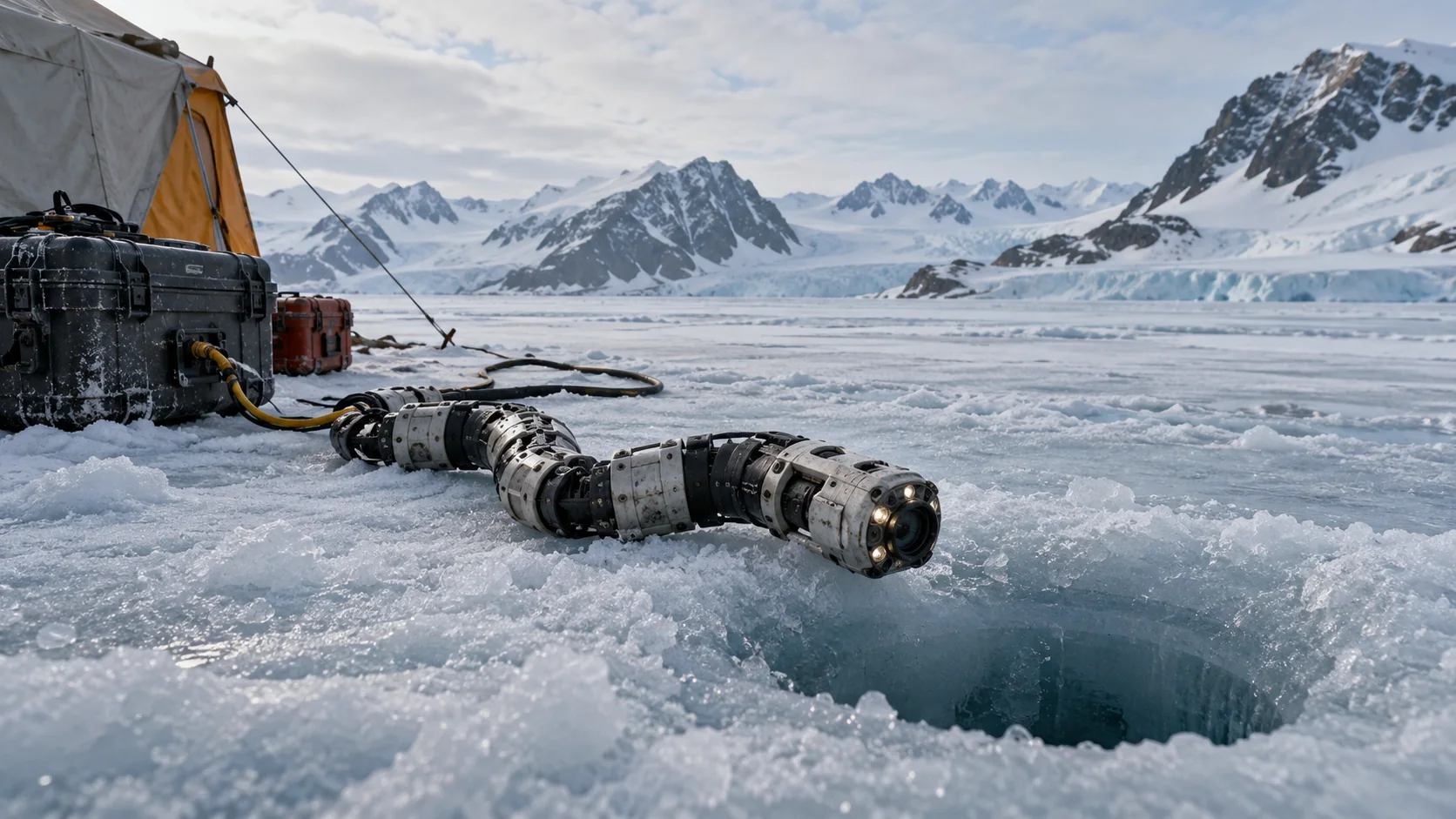
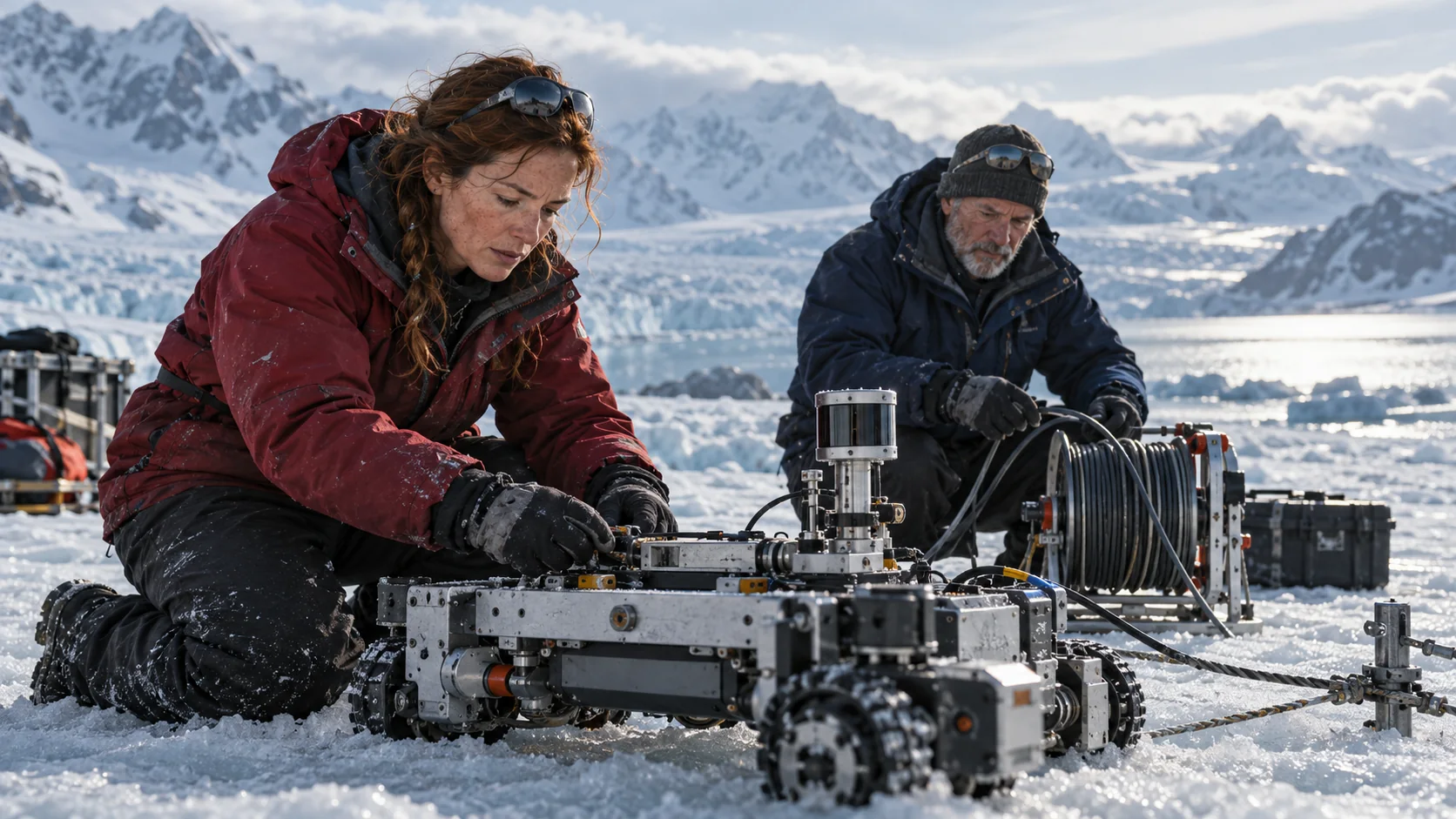
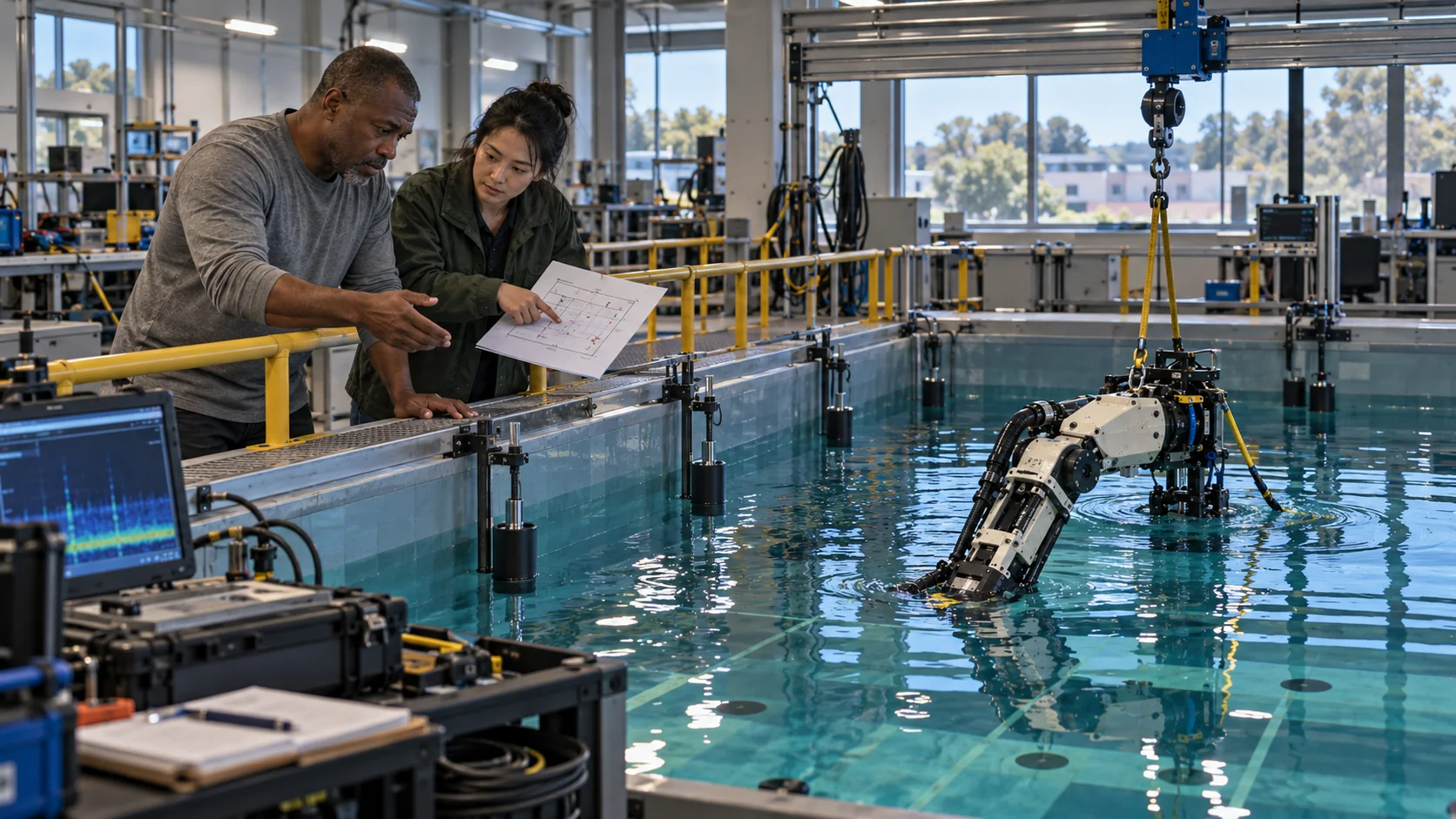
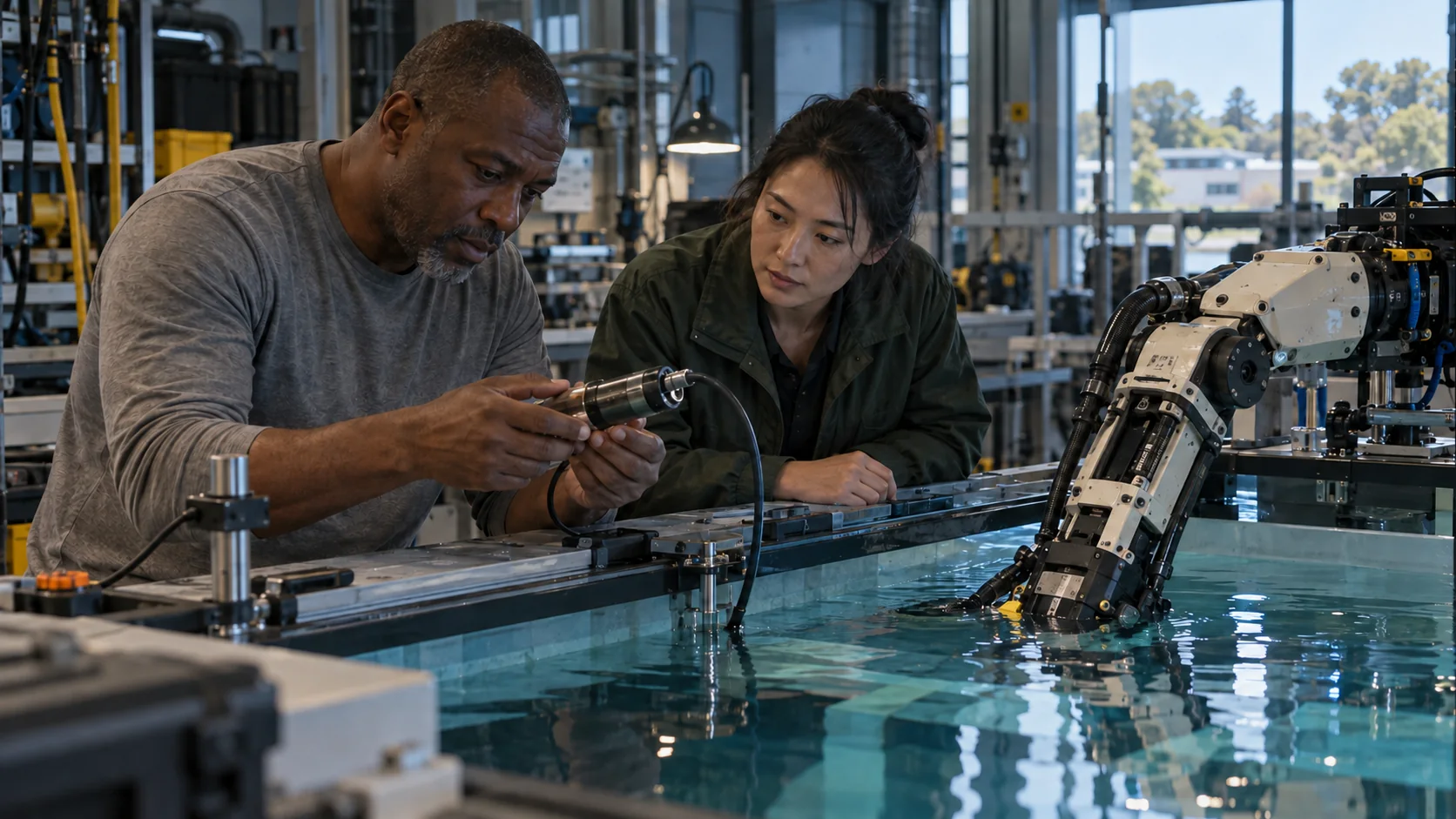
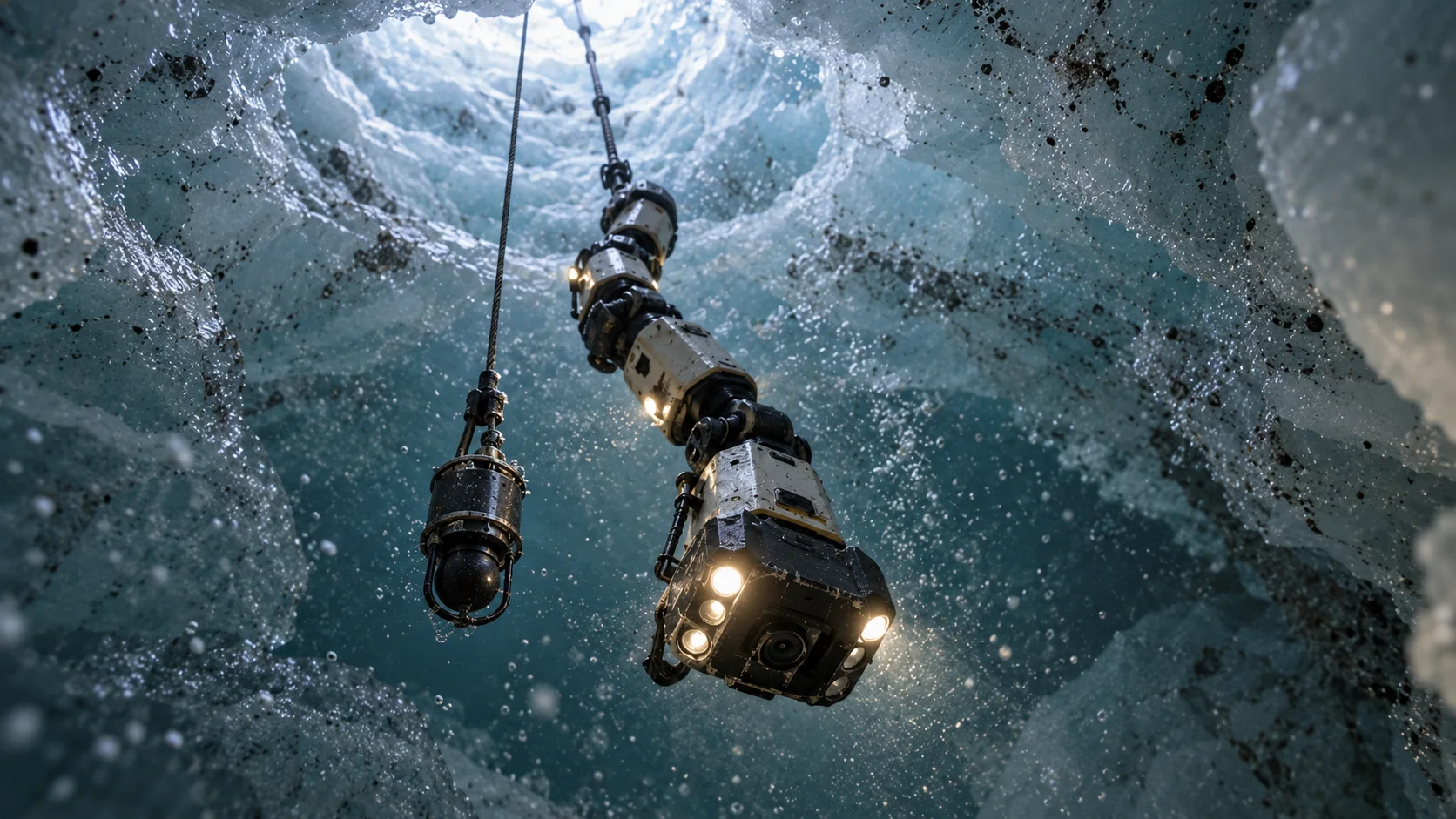
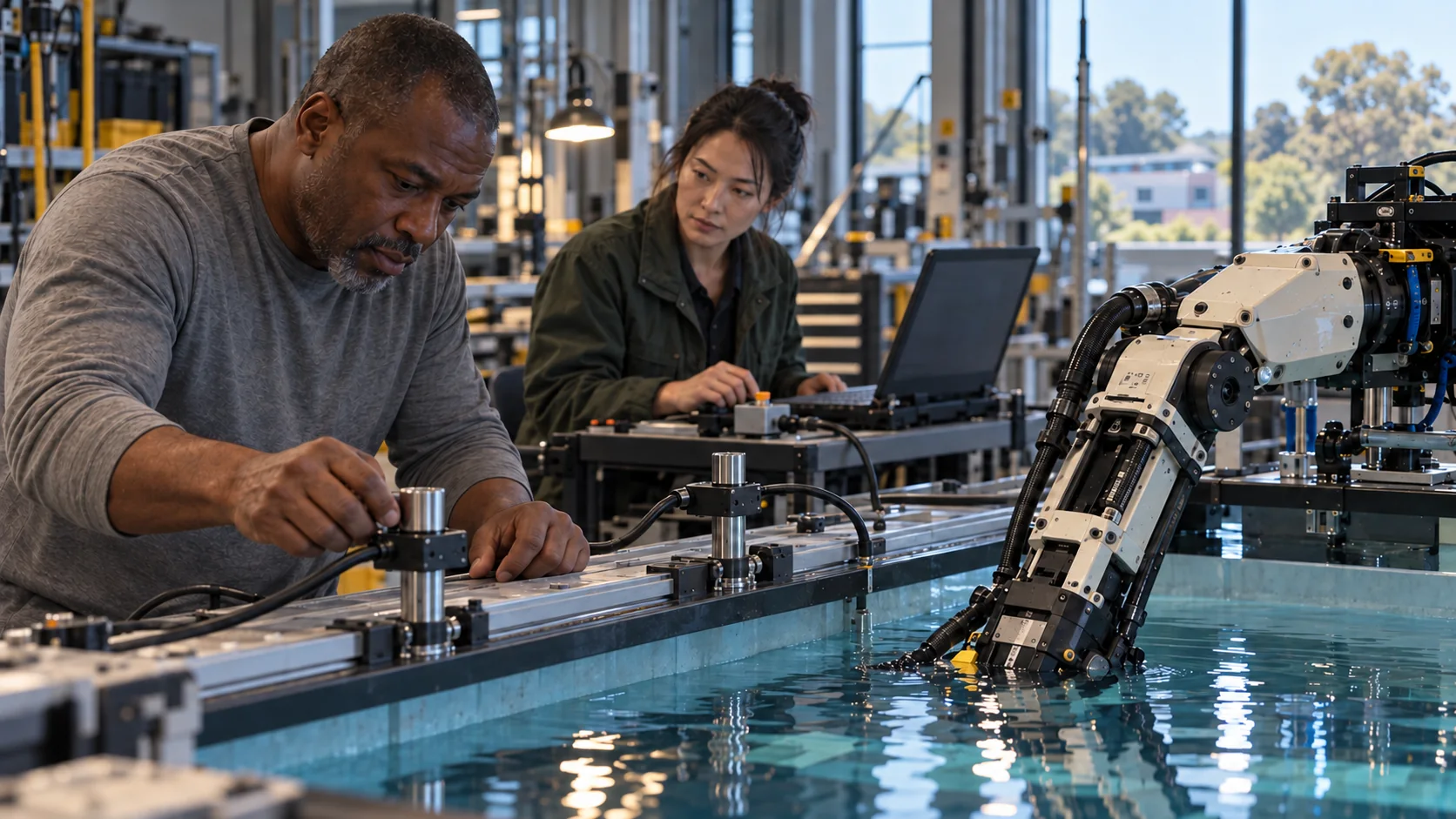
A JPL scientist needs temperature readings from a robot moving under ice on Earth, as practice for exploring the oceans under the ice of other moons. Before the robot goes deeper, she needs to know whether its stored readings can reach the surface. Getting a test tank, an operator, and a sound specialist together usually takes about eleven weeks.
With the test arranged sooner, two days in the tank give the answer: readings get through 3 times in 10 while the robot is moving and 10 times in 10 when it stops. The robot should stop to send its data before going deeper. From 2039, rovers exploring lava tubes at Aristarchus on the Moon follow the same rule.
Facts about this work
- Year
- 2026
- Medium
- Film
- Length
- 2:25
- Series
- JPL science support, twelve scenarios
- Setting
- A test tank and an ice field on Earth
- Editions
- Desktop film
- Production
- AI-generated stills and video, recorded narration, captions
Stills